When most travelers think of Uganda, visions of misty mountain gorillas in Bwindi, roaring waterfalls at Murchison, and sprawling savannah safaris usually come to mind. Yet beyond its world-renowned wildlife, the “Pearl of Africa” holds a deep, fascinating history etched into stone, brick, and iron.
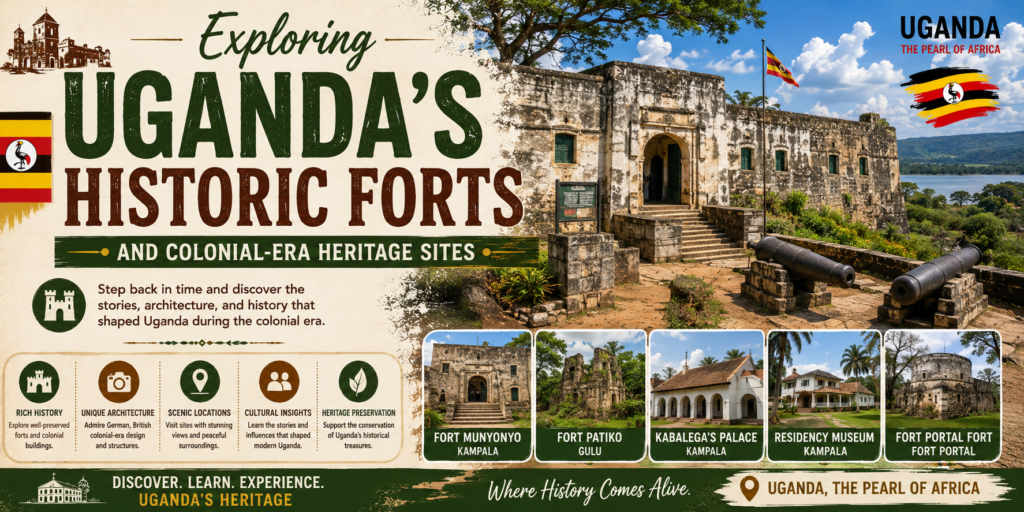
1. Fort Lugard (Old Kampala Hill)
Perched atop Old Kampala Hill, Fort Lugard holds significant historical weight as the birthplace of modern administrative Kampala.- The History: Built in 1890 by Captain Frederick Lugard, a British military officer and colonial administrator representing the Imperial British East Africa Company (IBEAC), this fort served as the first headquarters for British colonial operations in Uganda. It was here that Lugard raised the company’s flag, signaling the start of formal British influence over the Buganda Kingdom.
- What to See Today: The site now sits adjacent to the iconic Uganda National Mosque (Gaddafi Mosque). Visitors can explore the remaining military earthworks, historical cannons, and a small museum showcasing archival photographs, colonial treaties, and early 20th-century artifacts.
- Travel Tip: Climb the minaret at the nearby mosque for a panoramic 360-degree view of Kampala’s seven historical hills.
2. Fort Patiko (Baker’s Fort), Gulu
Located roughly 30 kilometers north of Gulu City in Northern Uganda, Fort Patiko is one of the country’s most poignant and well-preserved stone ruins.- The History: Originally established in the mid-19th century by Arab and Swahili ivory and slave traders as a holding depot, the post was captured in 1872 by the British explorer and abolitionist Sir Samuel Baker. Baker fortified the compound using thick dry-stone walls and turned it into an anti-slavery military outpost under the authority of the Khedive of Egypt.
- What to See Today: The heavy stone walls, underground holding pens, watchtowers, and iron gates still stand amid scenic granite boulders and lush northern plains. Local community guides provide rich, storytelling-driven tours that explain both the horrors of the slave trade and Baker’s subsequent governance.
- Travel Tip: Combine your visit to Fort Patiko with a wider cultural tour of Acholiland, known for its vibrant music, traditional dance, and warm hospitality.
3. Colonial Architecture and Relics in Entebbe
Before Kampala became Uganda’s bustling capital, the tranquil, leafy town of Entebbe on the shores of Lake Victoria served as the administrative capital during the British Protectorate.- State House & Early Government Secretariat: Stroll down heritage streets lined with colonial-era bungalows, red-brick administrative courts, and wide, tree-shaded avenues built to capture lake breezes.
- Entebbe Botanical Gardens (Est. 1898): Established under colonial botanist Alexander Whyte, these gardens were originally used to test cash crops like rubber, tea, and coffee in Ugandan soil. Today, they offer serene walking trails filled with colobus monkeys and exotic bird species.
- Old Entebbe Pier: The historic harbor where early steamships arrived, carrying mail, machinery, and travelers across Lake Victoria from Kisumu and Mwanza.
4. Fort Portal: The Gateway to the Rwenzori
Named in honor of Sir Gerald Portal, the British Consul-General of Zanzibar who visited the region in 1893 to establish British control, Fort Portal is one of Uganda’s cleanest and most picturesque tourism towns.- Colonial Legacy: Although little remains of Portal’s original wooden stockade, the town grew into a vital agricultural and administrative center for tea and coffee plantations during the early 1900s.
- Tooro Kingdom Palace (Karuzika): Situated on Karuzika Hill, the circular palace combines indigenous Tooro royal traditions with colonial architectural influences, overlooking the town and the distant Rwenzori Mountains.
- Heritage Stops: Historic stone churches, colonial golf courses, and century-old tea factories that still produce world-class black tea using heritage machinery.
5. Jinja: Industrial Heritage and the Source of the Nile
Jinja is famous as the adventure capital of East Africa, but its colonial-era past is equally compelling:- Ripon Falls & Speke Memorial: Near the Source of the Nile sits the monument commemorating John Hanning Speke, the first European explorer to reach this outlet of Lake Victoria in 1858.
- Colonial Asian Architecture: During the early 20th century, Jinja developed into Uganda’s industrial powerhouse. Walking down Main Street reveals preserved British-Indian architecture, art deco shopfronts, and verandahs built by early trading communities.
- Owen Falls Dam Memorials: The infrastructure projects commissioned during the late colonial era that powered the nation’s early electric grid.
Practical Travel Tips for History Enthusiasts
Planning a heritage road trip across Uganda requires a bit of logistical preparation to ensure a smooth, rewarding journey:- Entry Documentation: Before booking your regional transport or domestic flights, make sure to submit your online Uganda visa application in advance so your travel authorization is cleared well ahead of departure.
- Best Time to Visit: June to September and December to February offer dry weather conditions that make regional travel between northern and western districts easiest.
- Hiring Local Heritage Guides: Always work with certified on-site community guides at locations like Fort Patiko and Fort Lugard for authentic oral histories and accurate context.
- Transportation: A sturdy 4×4 vehicle with an experienced driver-guide is recommended for reaching regional historical spots outside major cities.
- Cultural Etiquette: Many historic and monarchical landmarks are revered by local communities; always seek permission before photographing sacred grounds or community elders.
Plan Your Heritage Journey with Confidence
Exploring Uganda’s colonial architecture, ancient kingdoms, and historic fortresses is an unforgettable experience for every traveler. To make your journey seamless from day one, having reliable assistance with your travel formalities makes all the difference.Why Choose Us for Your Travel Visa?
- Reliable Travel Visa Services: Our global approach has assisted numerous travelers in obtaining their visas smoothly and without delays.
- Round-the-Clock Assistance: Reach out to us 24/7, and our dedicated team is here to support you at every stage of the process.
- Experienced Visa Consultants: Receive expert guidance to ensure the acceptance of your application and error-free document submissions.
- Efficient Visa Application Process: Apply for your visa in minutes with our simplified, user-friendly form.