Kenya’s coastline is famous for its crystal-clear turquoise waters, white sandy beaches, and vibrant marine life. But beyond the beach resorts lies a fascinating, centuries-old story of maritime trade, fierce battles, and empires colliding. For history lovers and adventurous travelers, journeying down the Kenyan coast offers a deep dive into a rich heritage shaped by Swahili sultans, Portuguese conquerors, and Omani rulers.
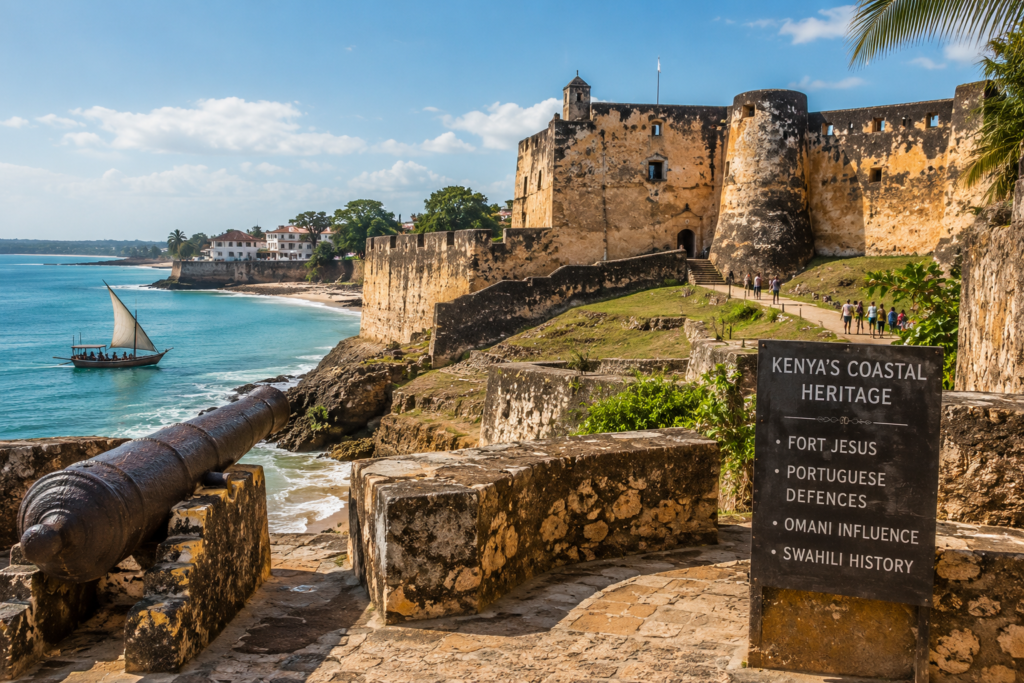
1. Fort Jesus, Mombasa: The Crown Jewel of Coastal Defence
No historical tour of Kenya’s coast is complete without visiting Fort Jesus in Mombasa. Built by the Portuguese between 1593 and 1596 under the design of Italian architect Giovanni Battista Cairati, this UNESCO World Heritage Site was constructed to protect the port of Mombasa.- The Architecture: Shaped like a man when viewed from above (reflecting Renaissance ideals of human-centric military design), the fort features thick coral stone walls designed to withstand cannon fire.
- A Tumultuous Past: Control of Fort Jesus changed hands countless times between the Portuguese, the Omani Arabs, and the British. Walking through its dark corridors, you can still see remnants of Swahili, Portuguese, and British military architecture.
- What to Expect Today: The museum inside houses a massive collection of ceramics, pottery, and artifacts recovered from shipwrecks and the surrounding area, giving you a vivid picture of Indian Ocean trade.
2. Vasco da Gama Pillar, Malindi: A Landmark of Exploration
Heading north along the coastline brings you to the historic town of Malindi and the iconic Vasco da Gama Pillar. Erected in 1498 by the famous Portuguese explorer Vasco da Gama as a navigational aid and a symbol of alliance with the local rulers, it stands proudly on a coral cliff overlooking the Indian Ocean.- Historical Significance: This is one of the oldest European monuments in Africa. The cross atop the pillar was originally carved from Lisbon limestone.
- Coastal Views: Aside from its historical weight, the site offers breathtaking panoramic views of the ocean, making it a peaceful spot for reflection and photography.
3. The Ruins of Gedi: A Mysterious Medieval Town Hidden in the Forest
Just a short drive from Malindi lies the ancient city of Gedi, a sprawling stone town tucked away inside a lush coastal forest. While not a traditional military fort, Gedi’s sophisticated town planning, defensive walls, and mysterious abandonment make it a crucial piece of Kenya’s coastal heritage.- Swahili Civilization: Dating back to the 12th century, Gedi was a thriving Swahili-Arab trading hub with grand mosques, palaces, and pillar tombs.
- The Mystery: Why was Gedi abandoned in the 17th century? Historians still debate whether it was due to dwindling water supplies, Omani invasions, or attacks from nomadic tribes. Exploring its moss-covered ruins feels like stepping onto a movie set.
4. Lamu Old Town: Living History and Seafaring Traditions
Further north lies Lamu Archipelago, specifically Lamu Old Town—the oldest and best-preserved living Islamic settlement in East Africa. While Lamu doesn’t have a singular massive fortress like Mombasa, the entire town functions as a living museum of coastal defence and maritime culture.- Lamu Fort: Located in the heart of the town, this fort was built between 1813 and 1821 by the Sultan of Pate and Omani rulers to garrison soldiers. Today, it serves as a vibrant community library and environmental museum.
- Dhow Culture: Lamu is famous for its traditional wooden sailing dhows. For centuries, these vessels were the backbone of coastal defence, trade, and transport along the East African seaboard.
Tips for Visiting Kenya’s Historical Coast
- Hire a Local Guide: The stories behind these ruins come alive when told by local guides who know the oral traditions and deep history of the Swahili coast.
- Best Time to Visit: The dry months from July to October and January to February offer ideal weather for exploring outdoor historical sites.
- Travel Preparation: Plan your itinerary ahead of time, and make sure your travel documents are in order before booking your flights.