If you are looking to step back in time and experience a living museum, look no further than Harar Jugol, Ethiopia. Tucked away on a plateau in the eastern part of the country, Harar is much more than just an ancient city—it is a breathtaking tapestry of culture, religion, and distinct urban design. Recognized as a UNESCO World Heritage site, this walled city offers travelers a rare glimpse into Islamic history combined with unique architectural marvels you will not find anywhere else in the world.
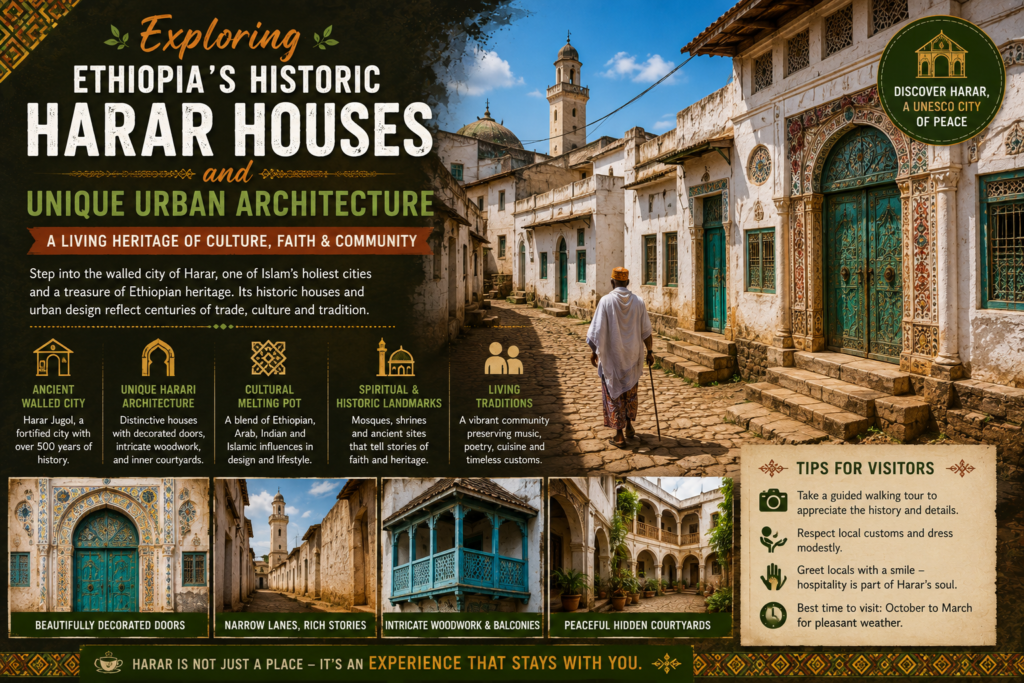
1. What Makes Harar Jugol Unique?
Harar, often referred to as the fourth-holiest city of Islam, is encircled by a stone wall known as the Jugol. Built between the 13th and 16th centuries, this defensive wall features five distinct gates, each representing a traditional neighborhood and historical entry point.
Inside these walls lies a dense maze of winding, narrow alleys lined with brightly painted townhouses. Unlike typical African or Middle Eastern ancient settlements, Harar developed its own distinct structural layout. The urban fabric is tight-knit, emphasizing community living, privacy, and religious devotion, boasting over 82 mosques and 102 shrines packed into a mere 48 hectares.
2. The Architectural Wonder of Traditional Harari Houses
The true heart of Harar’s architecture lies within its traditional domestic houses (Gey Gar). These structures are engineered with exceptional craftsmanship, designed to adapt to the local climate while accommodating cultural traditions.
-
The Interior Layout: A traditional Harari house features a multi-tiered interior design. The main ground floor typically consists of raised platforms or niches built into the thick mud-and-stone walls. These platforms are meticulously arranged to display rows of colorful, locally-made baskets (gidir), brassware, and porcelain.
-
Acoustics and Ventilation: Despite being tightly clustered, the homes are built to allow natural airflow through small, high windows, keeping the interiors cool during hot days.
-
Symbolism of Spaces: Every corner of a Harari home has a specific purpose. From designated areas for resting and welcoming guests to elevated spaces for family heirlooms, the house reflects the social hierarchy and values of the household.
3. The Fusion of Cultures in Harar’s Streetscape
What makes Harar’s urban design truly fascinating is its architectural blending. Over the centuries, influences from India, the Ottoman Empire, and local Oromo and Harari traditions fused together.
In the late 19th century, following Harar’s incorporation into modern Ethiopia, Indian merchants introduced a new style characterized by wooden-verandah houses painted in vibrant pastel colors. Walking through the streets, you will transition seamlessly from medieval Islamic stone architecture to Indian-influenced wooden balconies, creating an eclectic visual harmony that feels completely surreal.
Plan Your Journey to Harar
Visiting Harar is an unforgettable adventure for history buffs, photographers, and curious travelers alike. To make your trip smooth and hassle-free, planning your travel documents ahead of time is essential. Travelers from around the world can check requirements and apply for an Ethiopia visa online to streamline their entry process before setting off to explore the wonders of the Horn of Africa.
Why Choose Us?
When preparing for your East African adventure, having the right support team makes all the difference. Here is why travelers trust us:
-
Reliable Travel Visa Services: Our global approach has assisted numerous travelers in obtaining their Visa seamlessly.
-
Round-the-Clock Assistance: Reach out to us 24/7, and our experts will respond within 72 hours.
-
Experienced Visa Consultants: Receive expert guidance to ensure the acceptance of your application.
-
Efficient Visa Application Process: Apply for your Visa in minutes with our simplified form.