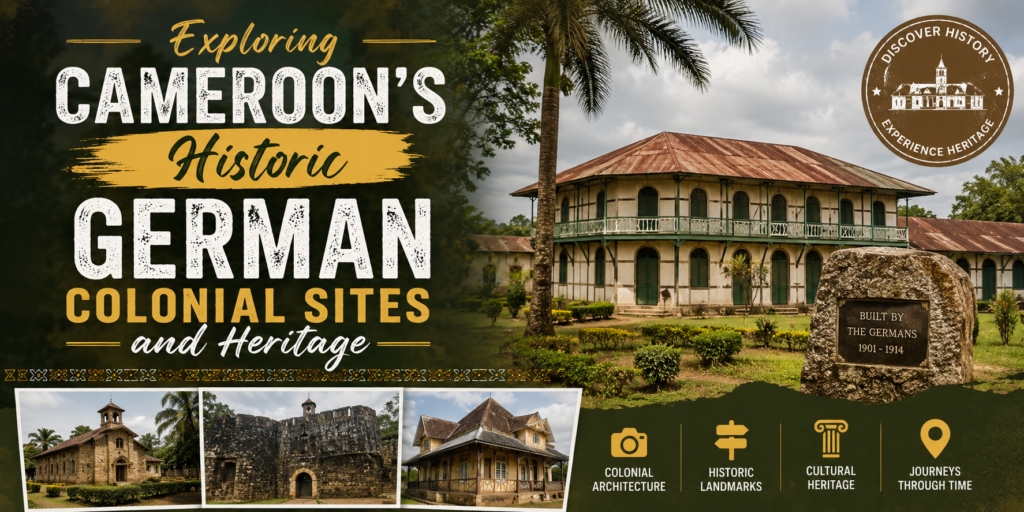
Cameroon has a rich, complex history that leaves visitors captivated by its diverse cultural influences. Among the most fascinating chapters of its past is the German colonial era, which lasted from 1884 to 1916. During this period, known as Kamerun, the administration left a distinct architectural and historical footprint that still stands today.
Understanding the German Colonial Era in Kamerun
Before diving into specific locations, it helps to understand the context. The German Empire established a protectorate over the territory in 1884. During their rule, the Germans invested heavily in infrastructure, including railways, administrative buildings, plantations, and ports, many of which laid the groundwork for modern urban centers in Cameroon. Exploring these sites allows travelers to witness preserved European-style architecture set against the lush, tropical backdrop of Central Africa. If you are planning an immersive historical itinerary across these fascinating regions, ensuring your travel documentation is fully approved is a crucial first step. You can review the necessary paperwork before departure by checking out the official Cameroon Visa Requirements guide to ensure a smooth journey.1. Buea: The Historic Mountain Capital
Nestled at the foothills of Mount Cameroon, the charming town of Buea served as the capital of the German colonial protectorate from 1901 to 1909. Because of its higher elevation, the climate was cooler, making it a favorite for German administrators seeking relief from the coastal heat.- The Prime Minister’s Palace: One of the most prominent landmarks in Buea is the former residence of the German Chancellor/Governor, often referred to as the Prime Minister’s Lodge or Palace. Built with distinctive German colonial architecture featuring wooden verandas and steep roofs, it stands as a majestic reminder of early 20th-century engineering.
- Bismarck Fountain: Located near the historic quarters, this small monument commemorates the German Chancellor Otto von Bismarck.
2. Kribi and the Historic Ekombe / Plantation Routes
Moving toward the coast, the coastal town of Kribi is famous for its stunning beaches and relaxing atmosphere, but it also holds historical significance tied to the colonial economy.- Colonial Infrastructure: The Germans developed southern Cameroon heavily for agricultural exports, establishing vast rubber, palm oil, and cocoa plantations. Remnants of old German bridges, administrative outposts, and rail foundations can still be discovered near the outskirts of Kribi and Edéa, showcasing how goods were transported to the coast for shipping back to Europe.
3. Limbé (Victoria) and Botanical Gardens
Founded in 1858 by British missionary Alfred Saker, the coastal town of Limbé later fell under German administration.- Limbé Botanical Gardens: Established by the Germans in 1892, these gardens were originally used to test the cultivation of economic crops like coffee, cocoa, rubber, and medicinal plants. Today, strolling through the gardens offers a peaceful retreat where you can explore ancient trees planted over a century ago alongside the botanical history left behind by German agronomists.
4. Douala: Port City Remnants
As the economic powerhouse and main gateway to Cameroon, Douala retains several fascinating structures from the early 1900s.- The Akwa Palace and Pagoda: While much of Douala has modernized rapidly, sharp-eyed visitors can spot historical buildings and monuments that date back to the dual influences of the German trading companies and local Duala kings. The famous “Pagoda” house in Douala, built with distinctive Asian-inspired architecture by German trading firms, is a unique architectural stop for photography lovers.
Plan Your Historical Journey to Cameroon Today
Exploring Cameroon’s living history is an unforgettable adventure, but before you pack your bags, you need to ensure your travel paperwork is in order. Navigating entry requirements can sometimes feel overwhelming, but you do not have to do it alone.Why Choose Us for Your Travel Needs?
- Reliable Travel Visa Services: Our global approach has assisted numerous travelers in obtaining their Visa smoothly and securely.
- Round-the-Clock Assistance: Reach out to us 24/7, and our dedicated experts will respond within 72 hours to answer your questions.
- Experienced Visa Consultants: Receive expert guidance tailored to your itinerary to ensure the highest chance of application acceptance.
- Efficient Visa Application Process: Apply for your Visa in minutes with our simplified, user-friendly form.