There is something deeply captivating about places where time has stopped. When the bustling energy of human life fades away, nature slowly reclaims its territory, leaving behind landscapes that feel both eerie and mesmerizing. If you love off-the-beaten-path adventures, Namibia is one of the best destinations in the world for this kind of exploration.
The Rise and Fall of Namibia’s Diamond Boom
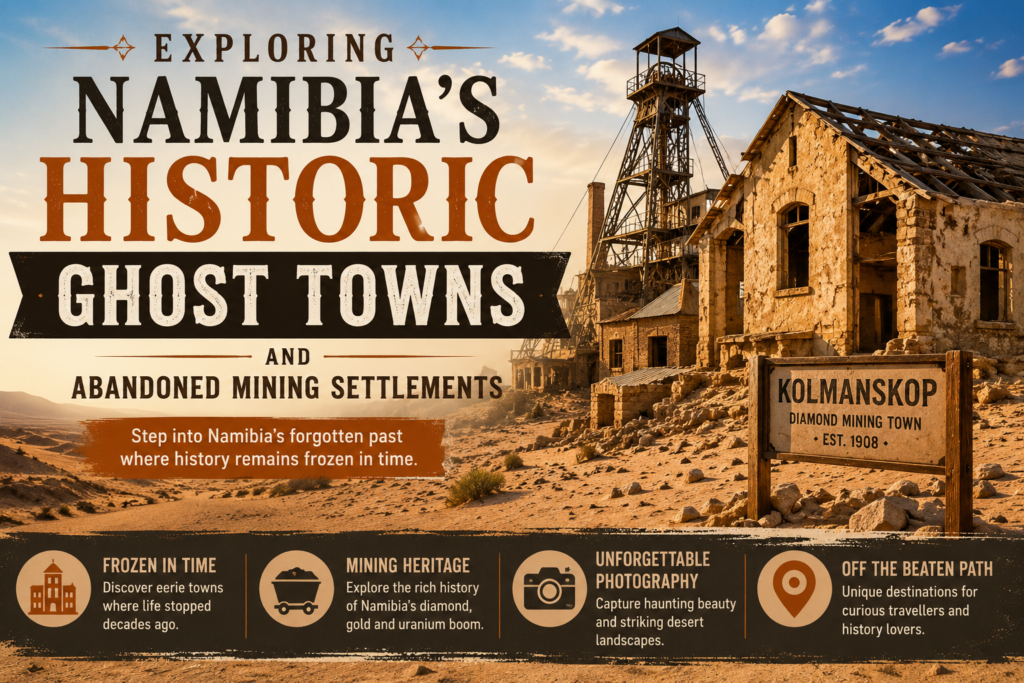
To truly appreciate Namibia’s ghost towns, it helps to understand how they came to be. In 1908, a railway worker named Zacharias Lewana found a sparkling stone while clearing sand from the tracks near the coastal town of Lüderitz. That stone turned out to be a diamond. News spread fast, triggering a massive diamond rush. Prospectors flooded the Namib Desert, establishing thriving mining towns almost overnight. These settlements were surprisingly luxurious for being in the middle of a harsh desert, boasting schools, hospitals, ballrooms, and modern amenities shipped straight from Europe. However, the boom did not last forever. When richer diamond deposits were discovered further south, mining operations shifted, and the towns were rapidly abandoned. Today, the desert wind and shifting dunes are the only permanent residents.Kolmanskop: The Jewel of the Namib Desert
Located just a few kilometers inland from the port town of Lüderitz, Kolmanskop is arguably Namibia’s most famous and photographed ghost town. During its peak in the 1920s, Kolmanskop was a wealthy hub producing a significant portion of the world’s diamonds. Today, it is famous for a very different reason: the desert has moved inside.What to Expect When Visiting Kolmanskop:
- Sand-Filled Rooms: Golden desert dunes have poured through broken doors and windows, creating surreal indoor dunes that rise halfway up the walls.
- German Architecture: You can still wander through the remnants of grand mansions, the old bowling alley, the first X-ray station in the Southern Hemisphere, and the community hall.
- Guided Tours: Guided morning tours offer fascinating insights into the daily lives of the miners and their families who once called this unforgiving desert home.
Elizabeth Bay: The Silent Coastal Settlement
Located further south down the rugged coastline from Kolmanskop lies Elizabeth Bay. Established in 1926, this settlement was another major diamond-mining hub that once housed hundreds of workers. Unlike Kolmanskop, which has been largely cleared and preserved for tourism, Elizabeth Bay feels much more raw and untouched. The harsh coastal winds and salty air have battered the buildings, leaving behind a hauntingly beautiful industrial landscape. Walking through the abandoned processing plants and residential quarters gives visitors a genuine sense of isolation and discovery.Pomona and Bogenfels: The Forbidden Zone
Deep inside Namibia’s restricted Sperrgebiet (Forbidden Zone)—an area tightly controlled due to ongoing diamond mining—lie the remote settlements of Pomona and Bogenfels.- Pomona: Famous for being exceptionally windy, Pomona was once one of the richest diamond fields in the world. Workers here reportedly picked diamonds right off the ground by moonlight. Today, stone houses stand resiliently against the relentless desert gales.
- Bogenfels: Named after a magnificent 55-meter-high rock arch that juts out into the Atlantic Ocean, Bogenfels features a ghostly ghost town nearby with old hospital buildings and mining infrastructure standing silently against the crashing waves.
Planning Your Journey to Namibia
Visiting these remote historic sites requires careful planning, especially when it comes to travel documentation and logistics. Whether you are flying in from afar or crossing borders, ensuring your paperwork is in order before you arrive is essential for a stress-free adventure. If you are wondering about entry requirements, you can easily check your eligibility and streamline your travel preparations by reviewing the Namibia E-Visa Eligible Countries Guide. Getting your travel authorization sorted early allows you to focus on what truly matters: packing your camera, renting a reliable 4\(x\)4 vehicle, and getting ready for the road trip of a lifetime.Why Choose Us for Your Travel Needs?
Planning an international trip can feel overwhelming, but you do not have to do it alone. Here is why travelers worldwide trust us to support their journeys:- Reliable Travel Visa Services: Our global approach has assisted numerous travelers in obtaining their visas smoothly and securely.
- Round-the-Clock Assistance: Reach out to us 24/7, and our dedicated experts will respond within 72 hours to answer your questions.
- Experienced Visa Consultants: Receive expert guidance tailored to your specific situation to help ensure the acceptance of your application.
- Efficient Visa Application Process: Apply for your visa in minutes using our simplified, user-friendly online form.