When travelers imagine Central Africa, dense rainforests, majestic wildlife, and untouched Atlantic coastline often come to mind. However, Gabon offers another incredible journey that is just as rich and captivating: its vibrant culinary culture.
What Makes Fang Cuisine Unique?
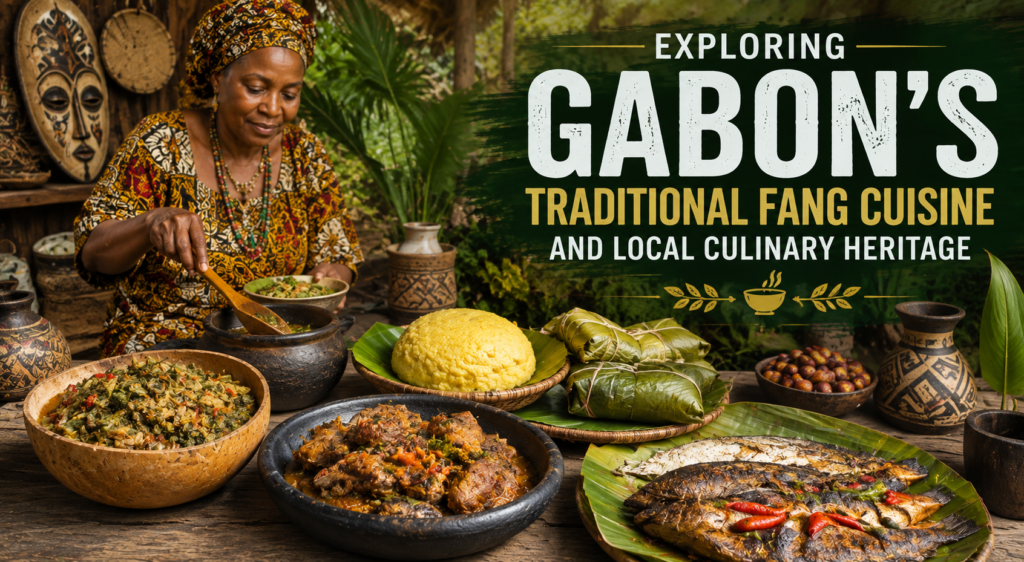
Fang cuisine is heavily influenced by the rich biodiverse environment of the Congo Basin. Historically forest dwellers and cultivators, the Fang people developed cooking methods designed to preserve food using natural elements.Key Characteristics of Traditional Fang Cooking:
- Smoked Flavors: Meats and fish are slowly smoked over open wood fires, adding deep, savory undertones to stews and sauces.
- Forest Nuts and Seeds: Ingredients harvested directly from rainforest trees, such as Odika (wild mango seeds) and indigenous palm nuts, serve as the basis for traditional sauces.
- Leaf-Wrapped Delicacies: Cooking food inside banana or marantaceae leaves holds in moisture, infusing dishes with a sweet, earthy botanical aroma.
- Natural Staples: Cassava (manioc), plantains, and yams form the carbohydrate foundation of almost every meal.
Top Traditional Fang Dishes You Must Try in Gabon
If you want to eat like a local in Libreville or rural Gabonese villages, make sure these traditional iconic dishes are on your list:1. Poulet Nyembwe (Palm Nut Chicken)
Considered Gabon’s national dish, Nyembwe means “palm oil” or “palm butter” in the local Myene language, but it is equally beloved across Fang households. Fresh palm nuts are harvested, cooked, and pounded to extract a rich, deep-orange cream. Chicken is grilled or smoked first, then simmered slowly in this rich palm butter until tender. It is velvety, flavorful, and usually served with boiled plantains or cassava.2. Sauce Odika (Gabonese “Chocolate” Sauce)
Don’t let the nickname fool you—Odika sauce is purely savory! It is made from the crushed, toasted kernels of the African wild mango tree (Irvingia gabonensis). When ground, the seeds form a solid block that resembles dark chocolate. Grated into hot broth with smoked fish, beef, or game meat, it transforms into a thick, aromatic sauce with a nutty, slightly bitter, and deeply satisfying taste.Planning Your Food Tour & Essential Travel Tips
Before embarking on your culinary journey to sample authentic Poulet Nyembwe or street-side Odika in Libreville, make sure you check the updated Gabon visa requirements to ensure smooth entry into the country. Having your travel authorization organized well in advance lets you focus on exploring local markets and enjoying authentic traditional dishes without any hassle.3. Mbongo Tchobi & Fish in Leaves (Liboke)
Freshwater fish caught from Gabon’s rivers are wrapped tightly in wild green leaves along with local forest peppers, wild onions, and palm oil. The wrapped parcels are cooked directly over hot charcoal coals. The leaves steam the fish in its own juices while absorbing the charcoal aroma, yielding extraordinarily tender fish with a fragrant herb flavor.4. Cassava Staples: Bâton de Manioc and Banane Pilée
In Fang culture, no meal is complete without a solid starch side dish to soak up rich sauces:- Bâton de Manioc (Bobolo): Fermented cassava paste wrapped into long sticks using leaves and steamed. It has a slightly tangy taste and a chewiness that pairs perfectly with Odika.
- Banane Pilée: Plantains boiled and mashed into a smooth, thick dough, served warm beside fish or poultry stews.
Cultural Dining Etiquette in Gabon
Food in Gabon is about community, family, and hospitality. Here are a few quick tips for enjoying food like a local:- Sharing is Central: Traditional meals are often served family-style in communal bowls.
- Wash Hands Before Meals: Handwashing basins or warm towels are presented before eating, especially when eating starch dishes by hand.
- Respect Local Ingredients: Gabonese hosts take immense pride in traditional forest recipes passed down through generations. Showing appreciation for the unique flavors is a warm gesture of respect.
Simplify Your Gabon Travel Preparation with Reliable Visa Services
Navigating international entry requirements shouldn’t stand between you and your dream food tour. Obtaining your visa for Gabon is now easier than ever with professional online assistance.Why Choose Us for Your Gabon Travel Visa?
- Reliable Travel Visa Services: Our global approach has assisted numerous travelers in obtaining their visa quickly and securely.
- Round-the-Clock Assistance: Have questions about paperwork? Reach out to us 24/7, and our dedicated experts will respond promptly within 72 hours.
- Experienced Visa Consultants: Receive expert guidance to ensure the acceptance of your application.
- Efficient Visa Application Process: Apply for your visa in minutes with our simplified form.