This article was originally published by – https://www.scriptzol.com/blog/what-is-an-ai-agent-bu
Artificial intelligence is no longer limited to chatbots answering simple questions. In 2026, businesses are moving beyond basic automation and adopting AI agents that can think, plan, make decisions, and execute tasks with minimal human involvement. Businesses are increasingly exploring AI agents to automate workflows, improve productivity, reduce operational costs, and scale faster.
Companies like Scriptzol are helping businesses implement AI-powered automation solutions that streamline operations, enhance customer experiences, and accelerate digital transformation.
But what exactly is an AI agent, and why is every business suddenly talking about it?
This guide explains everything from the AI agent definition to real-world business automation use cases, tools, architecture, and implementation strategies.
What Is an AI Agent?
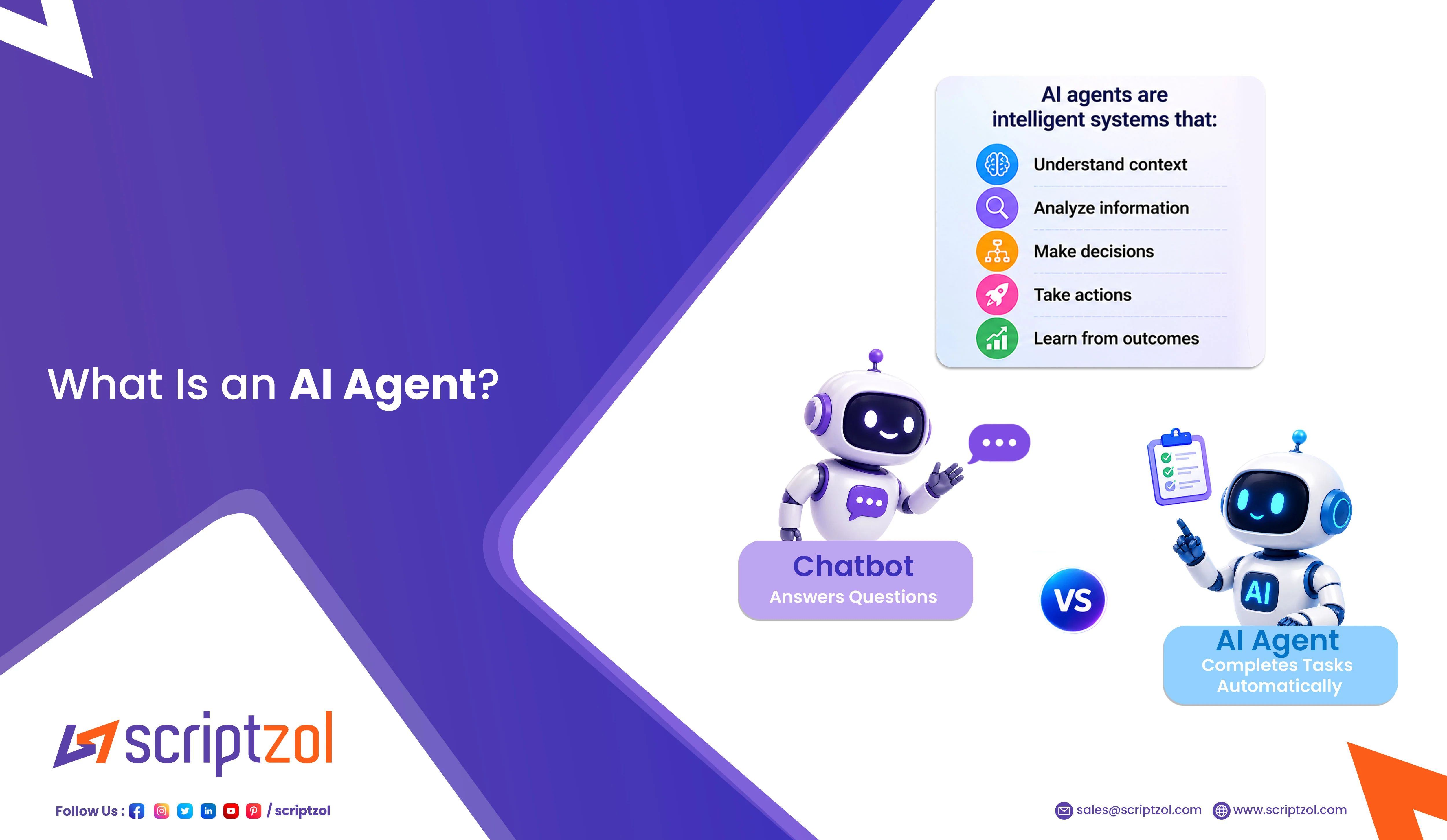
An AI agent is an intelligent software system designed to complete tasks autonomously based on a goal.
Unlike traditional software, which follows fixed rules, AI agents can:
Understand context
Analyze information
Make decisions
Take actions
Learn from outcomes
In simple words, if a chatbot answers your question, an AI agent actually does the work.
For example:
A chatbot may tell you how to schedule a meeting.
An AI agent can:
Check calendars
Find free slots
Send invites
Follow up with participants
That is the core difference.
How Does an AI Agent Work?
To understand what an AI agent is and how it works, think of it as a digital employee.
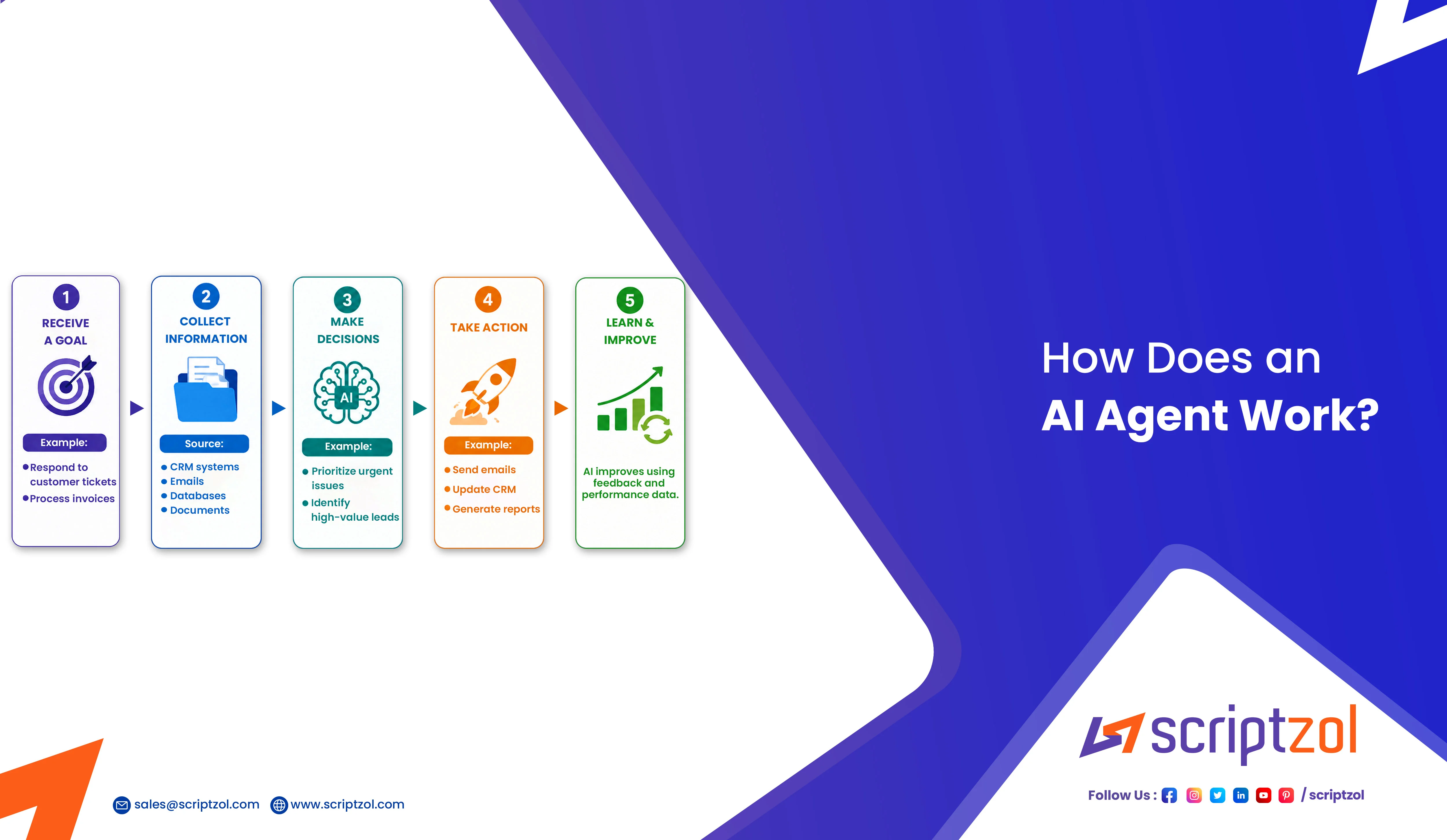
AI agents generally follow a simple workflow:
1. Receive a Goal
The system is given an objective.
Example:
Respond To Customer Tickets
Qualify Sales Leads
Process Invoices
2. Collect Information
The AI gathers data from connected tools such as:
CRM Systems
Emails
Databases
Documents
3. Make Decisions
The AI analyzes available information and decides what action to take.
Example:
Prioritize Urgent Customer Issue
Identify High-Value Lead
4. Take Action
The AI agent performs tasks automatically.
Example:
Send Emails
Update Crm
Assign Tasks
Generate Reports
5. Learn and Improve
AI agents can improve over time using feedback and performance data. This makes them more adaptable than traditional automation.
Why are businesses rapidly adopting AI agents in 2026?
Because companies want to save time, reduce operational costs, and improve efficiency without increasing manual workload.
AI agents help businesses automate repetitive tasks, streamline workflows, and support teams in day-to-day operations.
Lower Costs
Hiring larger teams for repetitive work is expensive. AI agents reduce operational costs by automating tasks like customer support, CRM updates, approvals, and reporting.
Faster Operations
AI agents complete tasks in seconds that would normally take hours, helping businesses move faster and reduce delays across workflows.
Higher Productivity
When repetitive work is automated, teams can focus on strategy, customer relationships, and business growth instead of routine admin tasks.
Better Scalability
As businesses grow, operations become more complex. AI agents help companies scale workflows efficiently without increasing workload at the same pace.
Improved Customer Experience
Faster response times, 24/7 support, and smoother workflows help businesses deliver better customer experiences consistently.
Agentic AI vs Traditional Automation
Many businesses hear terms like agentic AI , automation, and AI workflows and assume they all mean the same thing. In reality, they solve very different business problems.
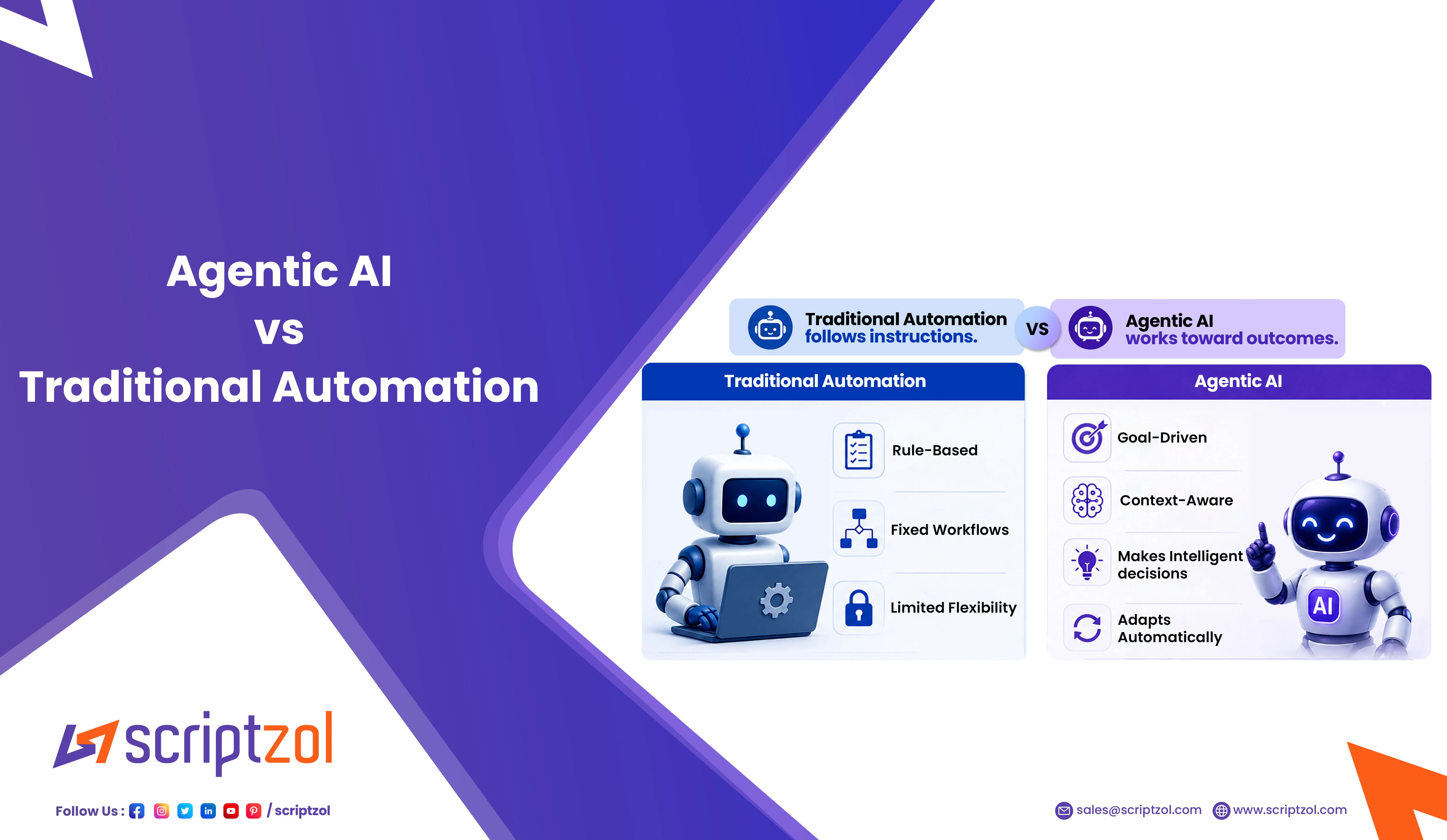
Traditional automation is built on fixed rules. It works by following instructions that humans define in advance.
These workflows are useful for repetitive tasks because they are predictable and easy to manage.
Traditional automation is best for:
Repetitive Workflows
Structured Tasks
Simple Rule-Based Processes
However, traditional automation has clear limitations. It struggles when situations change or when decisions require context.
For example, traditional automation cannot easily decide:
Which Lead Is Most Likely To Convert
Which Customer Issue Should Be Prioritized First
What Action Should Happen Next When Unexpected Data Appears
This is where agentic AI changes the game.
Unlike traditional automation, agentic AI is goal-driven instead of rule-driven. Instead of telling the system every single step, businesses define an objective, and the AI agent determines how to achieve it.
For example, a sales AI agent may be given one goal: Improve lead conversion.To achieve that, it can independently:
Analyze Incoming Leads
Prioritize High-Value Prospects
Choose The Right Follow-Up Strategy
Schedule Outreach Tasks
Update The Crm Automatically
Rather than waiting for humans to design every workflow, the AI agent continuously makes decisions based on available data and changing conditions.
This gives businesses several advantages:
More Flexible Decision-Making
Better Context Awareness
Improved Adaptability
Reduced Manual Intervention
In simple terms:
Traditional automation follows instructions.Agentic AI works toward outcomes.
That difference is what makes agentic AI much more powerful for modern businesses managing complex workflows, customer operations, and internal processes. As companies move toward intelligent automation in 2026, many are using agentic AI not just to automate tasks, but to automate decision-making itself.
How Businesses Are Using AI Agents in 2026
Businesses in 2026 are no longer using artificial intelligence only for content generation or chat support. They are now adopting AI agents for business automation to manage workflows, reduce repetitive work, and improve operational efficiency. AI agents are becoming a practical business asset across departments because they can complete tasks, make decisions, and coordinate workflows with minimal human input.
Instead of simply assisting employees, AI agents are now helping businesses automate complete processes from start to finish.
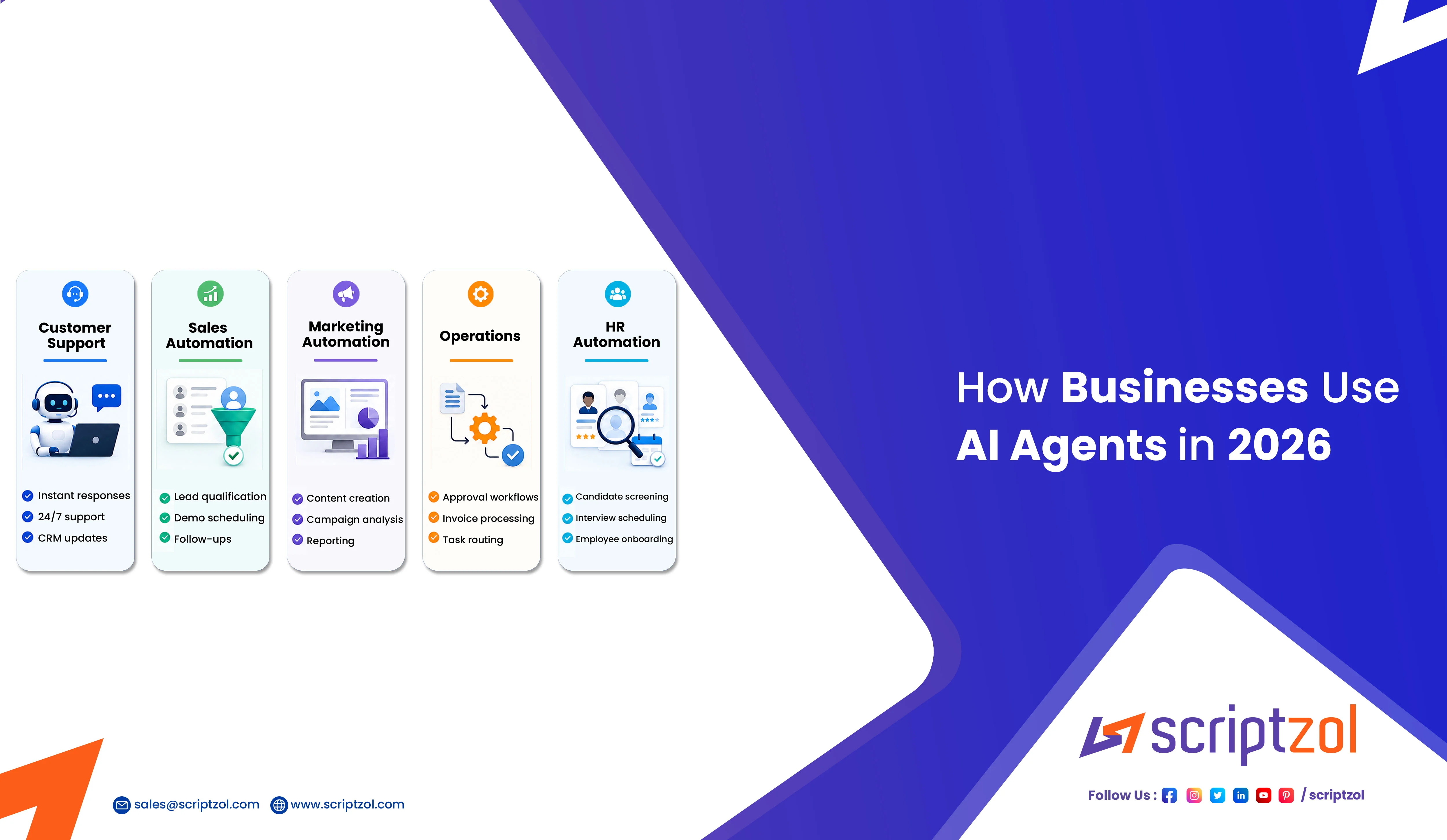
1. Customer Support Automation
Customer service is one of the most common business functions being automated with AI agents.
Modern AI support agents can:
Answer Customer Queries Instantly
Resolve Frequently Asked Questions
Escalate Urgent Or Complex Issues To Human Teams
Update Crm Systems Automatically After Each Interaction
For businesses, this creates major advantages.
Teams can provide:
24/7 Customer Support
Faster Response Times
Reduced Operational Costs
More Consistent Service Quality
Rather than hiring larger support teams to manage growing ticket volumes, businesses are using AI agents to handle routine conversations while human teams focus on complex customer needs.
2. Sales Automation
Sales teams are increasingly using AI agents to automate time-consuming administrative tasks.
AI sales agents can:
Qualify Incoming Leads
Score Prospects Based On Intent And Behavior
Schedule Demos Automatically
Update Crm Records
Send Follow-Up Emails Or Reminders
This allows sales teams to spend less time on manual operations and more time closing deals.
For growing businesses, this means:
Faster Lead Response Times
Better Conversion Opportunities
Cleaner Sales Pipelines
Reduced Admin Workload
In 2026, businesses are realizing that AI agents are not replacing sales teams. They are helping sales teams operate more efficiently.
3. Marketing Automation
Marketing teams are using AI agents to improve campaign execution and reporting.
AI marketing agents can:
Create Content Drafts
Schedule Campaigns
Analyze Campaign Performance
Generate Weekly Or Monthly Reports
Instead of manually collecting analytics from multiple tools, businesses can now use AI agents to summarize campaign insights and recommend next steps.
This improves:
Campaign Speed
Reporting Efficiency
Content Production Workflows
Decision-Making Quality
For lean teams, AI agents act like operational assistants that reduce execution bottlenecks.
4. Operations and Workflow Management
Operations is where workflow automation AI delivers some of the highest ROI.
Businesses are using AI agents to automate:
Approval Workflows
Invoice Processing
Internal Reporting
Task Routing
Employee Onboarding Workflows
For example, instead of manually routing invoices or approvals across departments, an AI agent can review workflow rules, identify missing information, notify stakeholders, and move tasks forward automatically.
This reduces delays, human error, and workflow bottlenecks.
As businesses grow, operational complexity increases. AI agents help organizations scale operations without scaling manual workload at the same rate.
HR Automation
Human resource teams are also adopting AI agents to automate internal processes.
Common HR use cases include:
Candidate Screening
Interview Scheduling
Onboarding Checklists
Employee Faqs
Document Coordination
Instead of HR teams manually handling repetitive coordination tasks, AI agents can automate much of the workflow while maintaining consistency.
Benefits include:
Faster Hiring Cycles
Smoother Onboarding
Reduced Administrative Burden
This gives HR professionals more time to focus on employee experience and strategic planning.
Why Businesses Are Investing in AI Business Automation
The rise of AI business automation is driven by one simple business need: efficiency. Businesses are under pressure to do more with fewer resources.
AI agents help by enabling:
Faster Workflows
Lower Operational Costs
Fewer Repetitive Tasks
Higher Team Productivity
Better Scalability
This is why many organizations now view AI agents as an investment rather than an experiment.
Instead of automating isolated tasks, businesses are automating entire workflows.
Real Examples of Business Automation with AI
AI agents are now being deployed across industries.
Finance
Finance teams use AI agents for:
Invoice Matching
Fraud Detection Alerts
Account Reconciliation
These processes are repetitive, rules-heavy, and ideal for automation.
E-commerce
E-commerce businesses automate:
Order Management
Return Processing
Customer Service Workflows
AI agents help online stores manage larger order volumes without proportionally increasing operational staff.
SaaS Companies
Software companies use AI agents for:
Customer Onboarding
Analytics Summaries
Ticket Routing And Triage
This improves both internal efficiency and customer experience.
Healthcare
Healthcare organizations are using AI agents for:
Appointment Scheduling
Claims Processing
Documentation Workflows
These automations reduce administrative friction and improve operational speed.
Conclusion
An AI agent is more than just another AI tool. It is intelligent software that can understand goals, make decisions, and complete tasks automatically.
In 2026, businesses across industries are using AI agents to automate customer support, sales, marketing, finance, HR, and operational workflows. The biggest shift is clear: businesses are no longer using AI only to assist work—they are using AI to execute work.
With advanced AI-powered business solutions from Scriptzol organizations can streamline processes, improve productivity, reduce operational costs, and deliver better customer experiences. From AI-driven automation platforms to industry-specific software solutions, Scriptzol helps businesses embrace the future of intelligent automation.
Companies that adopt AI agents early will be better positioned to scale faster, operate more efficiently, and stay competitive in an increasingly AI-driven world. The future belongs to businesses that combine human expertise with AI-powered execution and Scriptzol is ready to help make that transformation possible.
This article was originally published by – https://www.scriptzol.com/blog/what-is-an-ai-agent-bu