This article is originally Published by – https://www.amigoways.com/blog/google-algorithm-update-may-2026/
Google’s May 2026 Algorithm Update has introduced major changes in search rankings, AI-generated content visibility, and website authority signals.
Many websites experienced sudden ranking drops, traffic fluctuations, and lower visibility in Google Search results after this update rolled out globally.
This latest Google core update focuses heavily on:
Content quality
User intent satisfaction
AI-generated content evaluation
EEAT signals
Topical authority
Search experience optimization
If your website traffic has dropped or rankings have changed, this guide explains the latest SEO updates and recovery strategies for 2026.
At Amigoways, we help businesses improve search visibility through expert SEO Services and result-driven Digital Marketing Services. Learn how to recover lost traffic, boost rankings, and grow your online presence in 2026.
What Is the Google Algorithm Update May 2026?
Google launched its May 2026 core update rolling it out on May 21, 2026 – the second core update of the year. This rollout is expected to take up to more than two weeks to fully complete across all regions and all languages.
This broad core update is not a spam update or not a product review update. It forced in enhancing search quality, user experiencing, and reducing low-value AI- generated content in search results.
Google has become more focused in identifying:
Thin AI-written blogs and articles
Most Keyword-stuffed content
Parasite SEO pages
Low-quality affiliate websites
Content with poor user engagement
Fake Informations
At the same time, websites with strong expertise, original insights, and better user experience have gained higher visibility in Google Search results.
This update also strengthened Google’s AI search ecosystem, including AI Overviews and conversational search results.
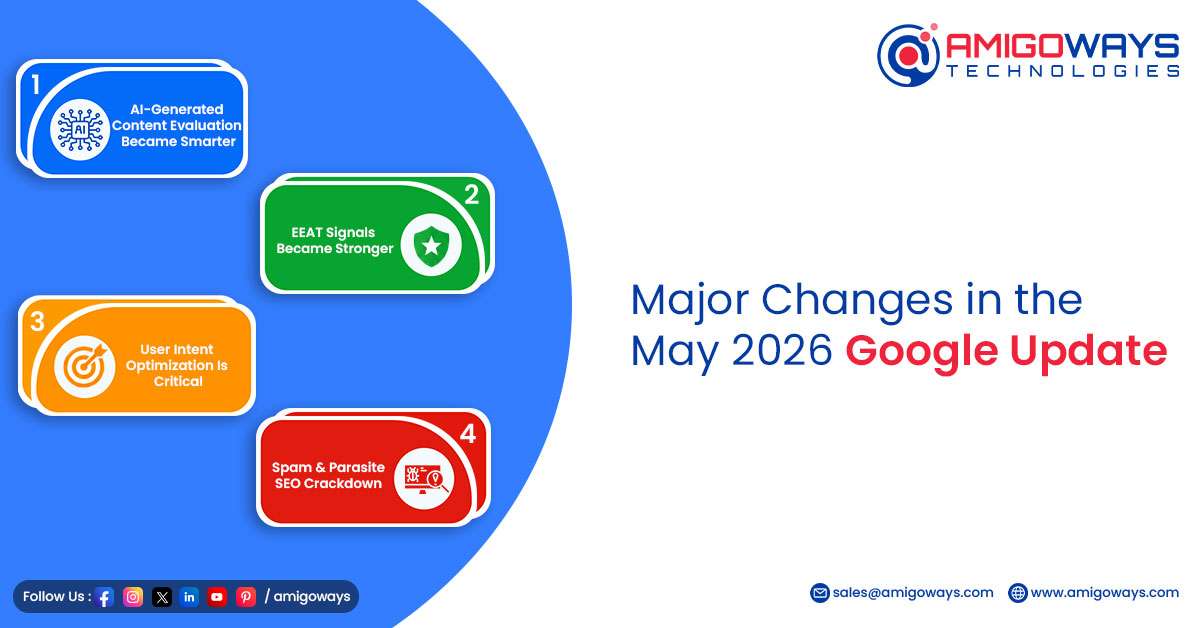
Major Changes in the May 2026 Google Update
1. AI-Generated Content Evaluation Became Smarter
Google is no longer targeting AI content itself.
Instead, Google now evaluates:
Originality
Experience
Accuracy
Depth
Human value
Generic AI-written blogs without expert insights are losing rankings rapidly.
However, websites using AI responsibly with human expertise are performing better than ever.
What Google Rewards Now
Real examples
Case studies
Expert opinions
First-hand experience
Unique insights
Helpful explanations
2. EEAT Signals Became Stronger
EEAT stands for:
Experience
Expertise
Authoritativeness
Trustworthiness
The May 2026 update increased the importance of EEAT signals across almost every industry.
Google now analyzes:
Author credibility
Brand authority
Content accuracy
Website trust signals
User satisfaction
Websites without clear expertise or brand trust are struggling to rank.
3. User Intent Optimization Is Critical
Google is now better at understanding search intent.
This means websites that directly answer user questions are outperforming websites focused only on keyword optimization.
For example:
If user searches:
“how to recover after Google update”
Google prefers:
Easy explanations
Actionable recovery steps
Fact Informations
Structured answers
Real solutions
Some real examples
Instead of overly optimized keyword-heavy pages.
4. Spam & Parasite SEO Crackdown
This update targeted parasite SEO strategies and methods. This is the biggest impact update.
Google penalized:
Expired domain abuse
Mass AI content publishing
Programmatic spam pages
Fake review websites
Manipulative backlinks
Websites using low-quality SEO tactics have lost significant rankings after the Google Algorithm Update May 2026.
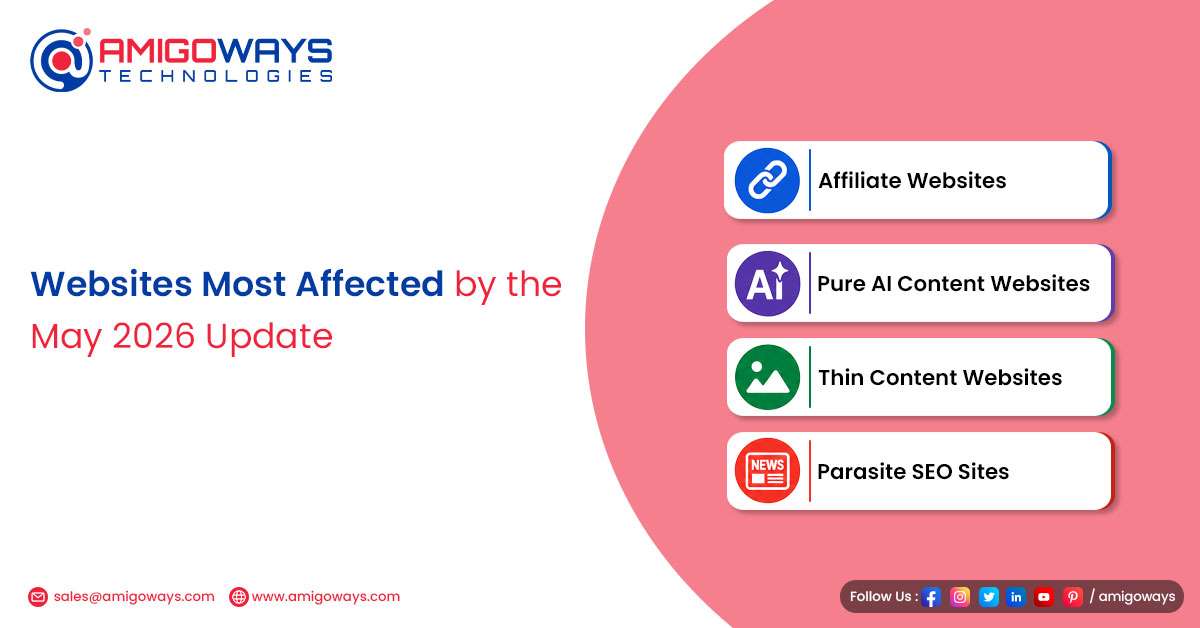
Websites Most Affected by the May 2026 Update
The Google May 2026 update affects all types of sites – Google was explicit about this. However, certain categories are seeing the highest volatility in early data:
All types of sites are affected by Google May 2026 update affects – Google was explicit about this. The below websites are mostly affected by the may 2026 update
Affiliate Websites
Low-value affiliate websites with copied product content saw major traffic drops.
Google now expects:
True reviews and ratings
Real testing
Comparison insights
Expert recommendations
Excat informations
Pure AI Content Websites
Many websites are publishing hundreds of AI-generated blogs and articles without any editing or expertise were heavily affected.
Google now detects:
Repetitive phrasing
Dumbed keywords
Generic explanations
Low engagement
Surface-level information
Authoritativeness
Thin Content Websites
Short blogs with little informational value lost visibility or only minimum content.
Modern SEO now requires:
Depth
Structure
Relevance
Expertise
Parasite SEO Sites
Parasite SEO methods or strategies are most riskier after this update. Those sites will be penalized by google.
Google improved its ability to detect:
Manipulative publishing
Authority abuse
Irrelevant hosted content
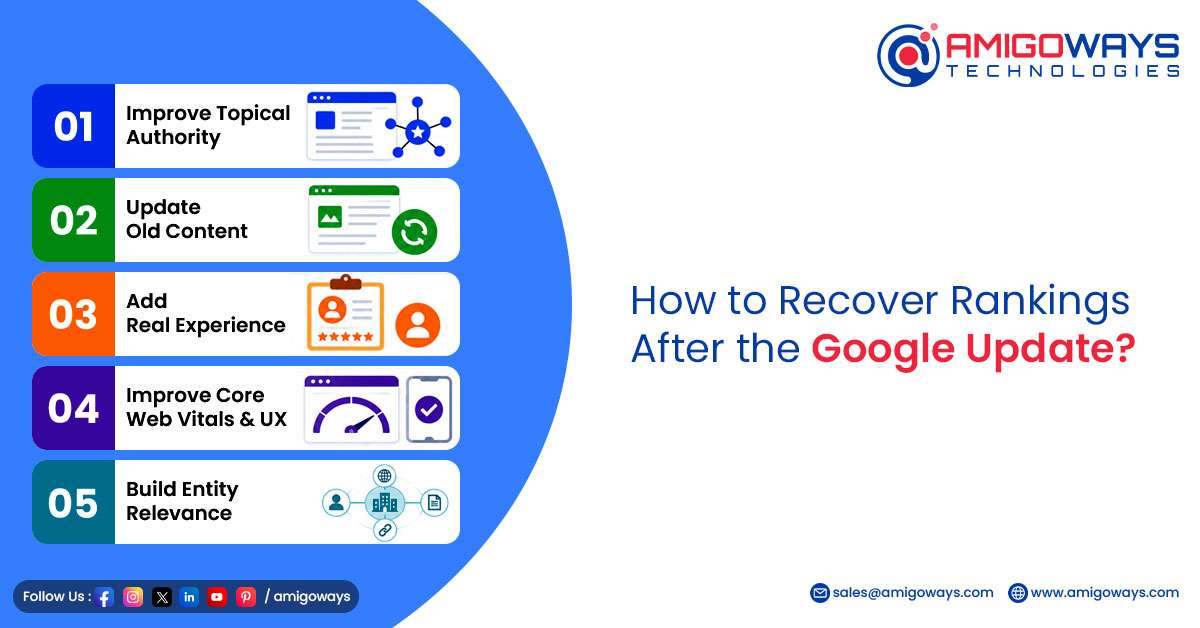
How to Recover Rankings After the Google Update?
1. Improve Topical Authority
Instead of writing random blogs or articles, create complete informative and user based authoritative articles related to that topic cluster.
If your niche is SEO, Create content around:
Technical SEO
GEO optimization
Entity SEO
EEAT
AEO optimization
Search Console
Link building
Quality Content optimization
Google now rewards niche expertise.
2. Update Old Content
Refreshing outdated articles or old blogs in your websites can improve rankings quickly.
Update:
Statistics
Examples
Screenshots
SEO practices
Internal links
Internal links to homepage or high searched
Freshness signals matter more in 2026.
3. Add Real Experience
Add the real experience to get your website rankings or getting better ranking so this is the best ranking factor.
Include:
Real examples
Personal insights
Real client results
Case studies
Original screenshots
Expert commentary
Google values human experience more than generic content.
4. Improve Core Web Vitals & UX
User experience became a stronger ranking signal.
Focus on:
Faster loading speed
Mobile optimization
Increase responsive
Clean design
Better readability
Reduced bounce rate
Reduce unwanted scripts
Even if you publish good content with poor UX design it should affect your rankings and website.
5. Build Entity Relevance
Google now understands entities instead of just keywords. So you have to add the keywords and information should the user be automatically ranked in the entities.
Add relevant entities naturally such as:
Google Search Console
AI Overviews
EEAT
Technical SEO
Core Web Vitals
GEO Optimization
Structured Data
This improves topical understanding and user understanding information.
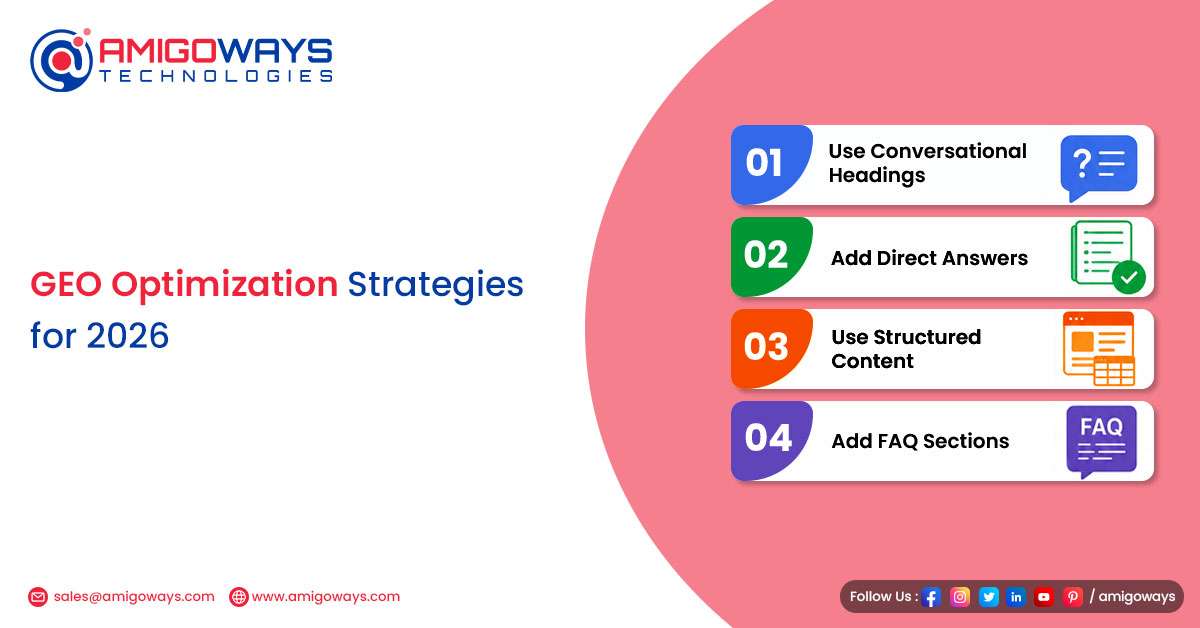
GEO Optimization Strategies for 2026
GEO (Generative Engine Optimization) is becoming essential because AI search engines now influence traffic heavily.
Now google ranking or seo is not longer now. The latest GEO is the most important.
You must optimize for:
ChatGPT
Google AI Overviews
Gemini
Perplexity
AI answer engines
1. Use Conversational Headings
Instead of:
“SEO Optimization Strategies”
Use:
“How Can you Improve your Website After A Google Update?”
AI engines only need conversational structures and methods.
2. Add Direct Answers
First starting the blog lines should be answers to the users. This is important for AI engines, mostly expect that and it will look like AI responses.
3. Use Structured Content
Website content should be a proper structure that is the most important for AI engines.
Use:
Bullet points
Short paragraphs
Tables
FAQs
Step-by-step sections
This improves AI readability and it will help to give your content in the AI response.
4. Add FAQ Sections
Google also says, FAQ does not work and removes snipped in the SERP. but it is not useful.
If you use valuable FAQ contents it will be more useful than it won’t.
FAQs improve:
Featured snippets
AI citations
Search visibility
Example FAQs:
What is the Google May 2026 update?
Why did my rankings drop suddenly?
How long does ranking recovery take?
Does AI content hurt SEO?
How to recover my website after Google update?
SEO Checklist After the May 2026 Update
If you write content before you should complete the checklist after you publish you will get ranking and traffic.
1. Technical SEO
Fix crawl issues
Improve core web vitals
Increase page speed
Optimize mobile UX
Check indexing
2. Content Quality
Remove thin pages
Improve article depth
Add expert insights
Avoid keyword stuffing
Add semantic keywords
EEAT related content
3. Internal Linking
Connect related articles
Build topic clusters
Improve navigation
4. Schema Markup
Add Article schema
Use Organization schema
User Author schema
5. User Engagement
Improve readability
Reduce bounce rate
Increase time on page
Add needed images
Final Thoughts
The Google Algorithm Update of May 2026 clearly explained the SEO future direction.
Google is prioritizing helpful and trustworthy content, Generative Engine Optimization (GEO), strong topical authority, and an enhanced user experience supported by smart AI assistance.
If you are searching for: