In a job market shaped by rapid change and increasing competition, the experience letter continues to serve as a cornerstone of professional validation. While resumes present curated achievements and interviews reveal personality, this document delivers something far more concrete—verified proof of your work history.
Issued at the end of employment, an experience letter captures the essence of your role within an organization. It outlines your responsibilities, highlights your contributions, and reflects your professional conduct. More importantly, it does so with institutional authority, making it a trusted reference for future employers.
Growing Importance of an Experience Letter
As hiring processes become more data-driven and verification-focused, employers are placing greater emphasis on authentic documentation. An experience letter fulfills this requirement by offering both factual accuracy and contextual depth.
For professionals seeking new opportunities, this document often becomes indispensable. It validates claims made in resumes and provides recruiters with a clearer understanding of your capabilities. Without it, candidates may face unnecessary scrutiny or delays, particularly in organizations with strict background checks.
In essence, the experience letter acts as a professional endorsement—subtle yet significantly influential.
What Makes an Experience Letter Effective
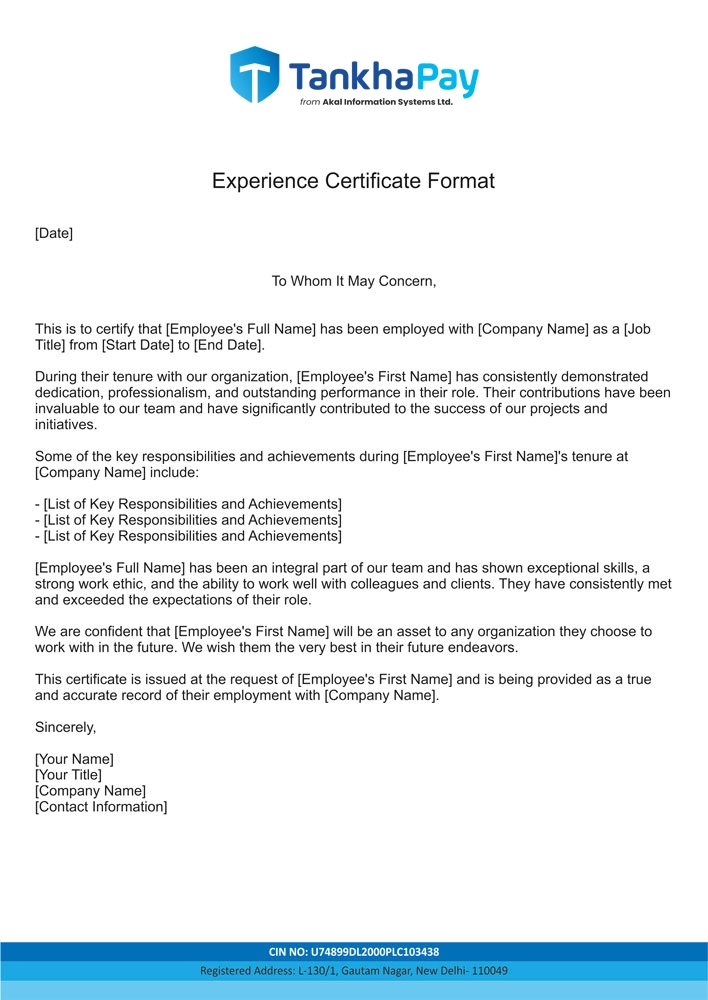
An effective experience letter is structured, precise, and thoughtfully written. It conveys essential information while maintaining a professional tone, ensuring that the employee’s contributions are clearly communicated.
The key components typically include:
- Official company letterhead
- Date of issuance
- Employee’s full name and job title
- Duration of employment
- Description of roles and responsibilities
- Highlights of performance and work ethic
- Closing statement with appreciation
- Authorized signature and company seal
This format ensures clarity while allowing the organization to add a personalized touch, making each letter both standardized and unique.
Experience Letter vs Experience Certificate
Although the terms are often used interchangeably, there is a clear distinction. An experience certificate is more formal and concise, primarily focusing on employment verification. It follows a fixed structure and is typically brief.
An experience letter, on the other hand, provides a more detailed account. It highlights not just what you did, but how effectively you performed. This added narrative makes it particularly valuable during hiring decisions, where context can influence outcomes.
Together, these documents complement each other, but the experience letter often carries greater descriptive weight.
Relevance Across Industries
The significance of an experience letter extends across all professional domains. In technology, it validates technical expertise and project involvement. In finance, it confirms accuracy and compliance. In education and healthcare, it reflects responsibility, trust, and ethical practice.
For instance, a data analyst’s experience letter may emphasize analytical thinking and insight generation, while a sales professional’s letter focuses on relationship-building and revenue growth. This adaptability makes the document universally applicable and highly valuable.
Requesting an Experience Letter Professionally
Obtaining an experience letter requires a clear and respectful approach. Requests should be directed to the appropriate authority, such as HR or a reporting manager, and must include relevant employment details.
Maintaining a formal tone and expressing gratitude can significantly improve the chances of a timely response. Additionally, following up politely ensures that the process remains smooth without appearing intrusive.
Protecting and Storing Your Experience Letter
Given its importance, safeguarding your experience letter is essential. Misplacing it can lead to complications during job applications or verification processes.
Digitizing the document is a practical solution. Storing it securely in cloud platforms or email ensures easy access when needed. Keeping multiple formats, such as PDF and editable versions, adds an extra layer of convenience.
Future of Experience Letters
With the rise of digital HR systems, experience letters are gradually becoming more streamlined and accessible. Automated tools now generate accurate and consistent documents, reducing administrative delays. At the same time, digital verification methods are enhancing trust and transparency.
Despite these advancements, the core purpose remains unchanged: to provide a reliable account of professional experience.
Final Perspective: A Gateway to Opportunity
The experience letter is more than a formal requirement—it is a reflection of your professional journey. It validates your efforts, strengthens your credibility, and supports your future ambitions.
When handled carefully, it becomes a powerful career asset. In an environment where trust and authenticity matter more than ever, the experience letter stands as a document that not only records your past but also opens doors to new possibilities.