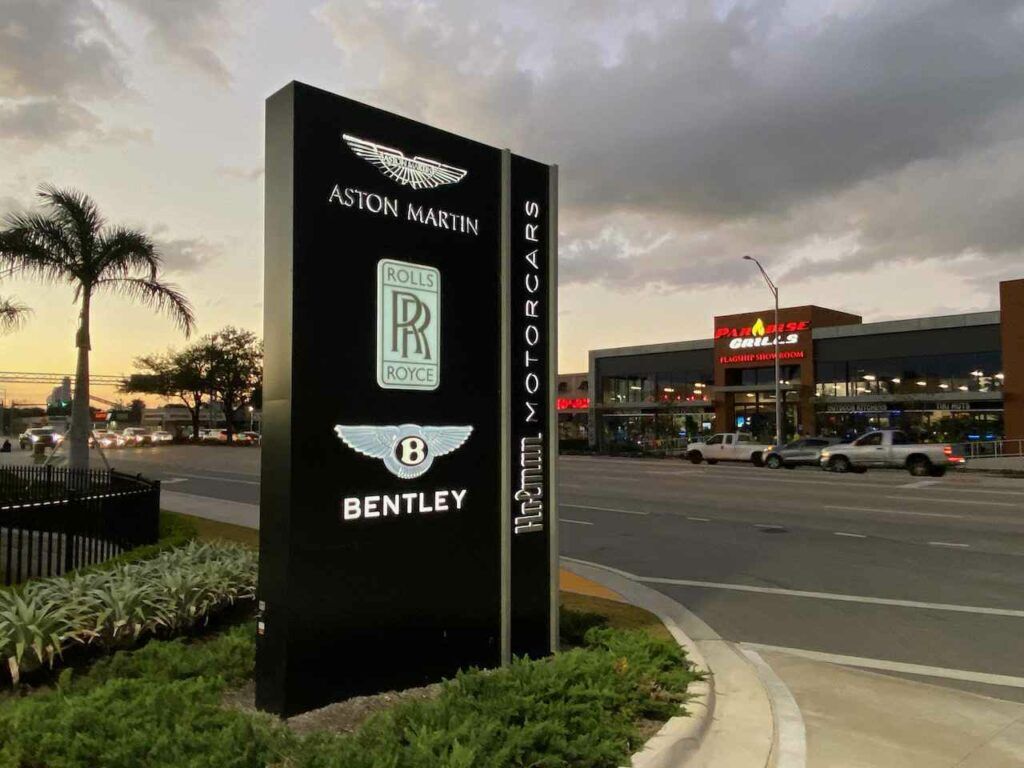
A building-mounted sign speaks to whoever is already close enough to look up. A sign planted at the edge of a property speaks to everyone driving by long before they reach the parking lot. That distinction is the entire reason monument signs for business locations remain relevant even as digital advertising expands.
These structures sit low, close to the road, and rarely rely on a building’s architecture to be effective. That independence is exactly what makes them valuable for certain types of properties.
Why Height Isn’t the Point
Unlike pylon or pole signs, monument signs are designed to stay close to the ground, typically between three and eight feet tall. That might seem like a disadvantage at first glance, but it actually solves a specific visibility problem.
Drivers approaching a property scan the roadside, not the sky. A low, wide structure sits directly in that natural line of sight, which is why monument signage performs so well along busy commercial corridors.
The Properties That Benefit Most
Businesses set back from the road, such as those behind large parking lots or landscaped entrances, gain the most from this signage style. Without something at the property line, a building’s own signage can become nearly invisible from the street.
Medical campuses, corporate parks, and multi-tenant retail centers rely heavily on monument signage for this exact reason. It bridges the visual gap between the road and a building that might otherwise go unnoticed.
Materials That Withstand the Elements
Because these structures sit outdoors at ground level, material choice matters more here than almost any other sign type. Brick and stone bases are common, both for their durability and their ability to complement surrounding landscaping.
Aluminum and high-density urethane are frequently used for the sign face itself, offering a lightweight yet weather-resistant alternative to solid stone or wood. Each material choice affects both appearance and long-term maintenance costs.
Single Tenant Versus Multi Tenant Design
A single business occupying a monument sign has more design freedom, often incorporating a full logo, tagline, or brand color scheme across the entire structure. Multi-tenant properties face a different challenge entirely.
These signs must divide space fairly among several businesses while still remaining legible from a moving vehicle. Panel spacing, font consistency, and tenant hierarchy all become critical design decisions in shared signage.
Lighting Considerations for Ground Level Visibility
Because monument signs are viewed from a distance and often at night, lighting plays a significant role in their effectiveness. Internally lit panels remain a popular option, offering even illumination across the entire face.
External spotlighting is a common alternative, particularly for stone or masonry monument signs where the texture of the base is part of the intended visual impact. The lighting choice often depends on whether the surrounding property is more corporate or more decorative in style.
Permitting and Placement Realities
Unlike interior signage, monument signs typically require permits, setback approvals, and adherence to local size restrictions. These regulations vary significantly between municipalities and even between commercial zones within the same city.
Experienced sign providers such as Total SignWorks often manage this process directly, since navigating permit requirements without prior experience can delay installation by weeks or even months.
Final Thoughts
Monument signs for business properties solve a problem that building signage simply cannot address on its own: visibility at the point where a driver first decides whether to turn in. For properties set back from the road, that first glance often matters more than anything mounted higher up.
Frequently Asked Questions
1. How tall are monument signs typically built? Most range between three and eight feet, though exact height is often limited by local zoning regulations.
2. Do monument signs require a permit? In most municipalities, yes. Permits often account for size, setback distance, and illumination type.
3. What materials are most common for monument sign bases? Brick, stone, and stucco are popular choices, often paired with aluminum or urethane sign faces.
4. Are monument signs suitable for multi-tenant properties? Yes, they are commonly used to display multiple business names in a single, organized structure near the property entrance.
5. How are monument signs typically illuminated at night? Internal panel lighting and external spotlighting are the two most common approaches, depending on the sign’s material and design.