Buying Carry on Luggage often comes down to a quick decision based on color or price, but the features that actually matter reveal themselves later — usually the first time a wheel jams in a crowded terminal or a zipper gives out mid-trip. Cabin luggage gets used far more often and far more roughly than most people expect, which makes it worth slowing down and actually evaluating a bag properly before buying. Bugatti Collections, a Canadian luggage brand backing its products with a lifetime warranty on luggage, has built its cabin lineup around exactly the kind of details that separate a bag built to last from one that looks good on day one and falls apart by month three.
Size Compliance Isn’t Optional
Before anything else, cabin luggage needs to actually fit airline size restrictions — a detail that sounds obvious but trips up more travelers than expected, especially with budget carriers enforcing stricter limits than legacy airlines. A good cabin bag is designed specifically around widely accepted carry-on dimensions, not just labeled “carry-on” without real consideration for how airlines actually measure and enforce size at the gate.
Shell Material and How It Handles Impact
Hardshell cabin bags, typically built from polycarbonate or ABS, resist crushing and hold their shape well through repeated handling, making them a strong choice for frequent travelers who want consistent protection trip after trip. Softshell versions offer more flexibility and often a bit more give when squeezing into a tight overhead bin, at the trade-off of slightly less rigid protection. Neither is objectively superior — the right choice depends on how a traveler actually uses their bag.
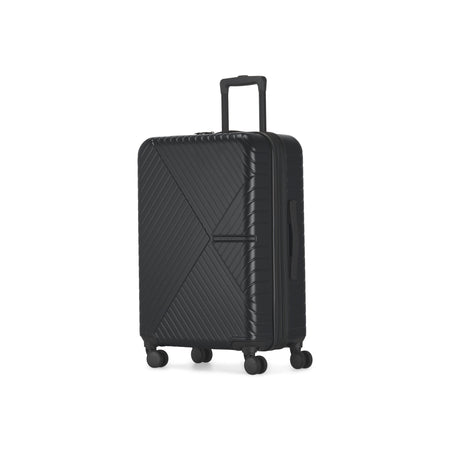
Wheel Quality Determines the Daily Experience
Wheels are one of the most-used, most-abused parts of any cabin bag, and their quality shapes the entire day-to-day experience of traveling with it. Smooth-rolling, multi-directional spinner wheels make it significantly easier to maneuver through crowded airports, weaving around other travelers without constant readjustment. Cheaper wheel assemblies tend to wear down fast under repeated use, so it’s worth paying attention to how a bag’s wheels are mounted and how smoothly they roll even when testing it in store or based on detailed product descriptions.
Handle Mechanism and Ergonomics
A telescopic handle that extends smoothly, locks securely at multiple heights, and doesn’t wobble under weight is a small detail that makes a noticeable difference over repeated use. A poorly designed handle turns even a lightweight bag into an awkward, tiring pull through a long terminal, while a well-built one disappears into the background of the travel experience — exactly where it should be.
Interior Organization Matters More Than It Seems
Cabin luggage gets packed and repacked constantly, which makes interior layout a genuinely important feature rather than a minor detail. Compression straps, separate compartments, and built-in organization pockets make it easier to pack efficiently and find items quickly, especially useful for travelers who rely on packing cubes to keep their Travel Suitcase organized on longer or more complex trips.
Weight Without Sacrificing Durability
Every kilogram of empty bag weight eats into the total weight allowance airlines enforce, which matters even more for cabin luggage than checked bags given how strictly overhead bin weight limits get checked. A well-engineered cabin bag manages to stay lightweight without feeling flimsy — a balance that separates genuinely well-built Travel Luggage from bags that cut weight by cutting durability instead.

Zipper and Hardware Quality
Zippers are an easy detail to overlook but a common failure point over time. Reinforced zipper pulls, smooth gliding tracks, and slightly oversized teeth all contribute to hardware that holds up over years of repeated use rather than giving out after a handful of trips. This applies just as much to the smaller hardware — buckles, straps, and locks — since these are the components most likely to fail quietly until the moment they’re actually needed.
Warranty as a Signal of Real Confidence
How a brand backs its own Bags and luggage says a lot about how durable it actually expects the product to be. A meaningful warranty period, paired with a fair return policy, reflects a manufacturer that has tested its products enough to stand behind them — rather than one hoping issues surface after the return window closes.
Final Thoughts
Choosing the right cabin luggage comes down to details that aren’t always obvious at first glance — shell material, wheel quality, handle ergonomics, interior layout, weight, and the hardware holding it all together. None of these features show their true value on day one; they show it after dozens of trips, which is exactly why it’s worth evaluating cabin luggage the same way frequent travelers do, rather than choosing based on looks alone.
For more information
Instagram: Bugatti Collections
Facebook: Bugatti Collections
Contact email: service@bugattigrp.com