Michael Phelps showed up to the 2016 Olympics covered in mysterious purple circles, and just like that, a therapy that is thousands of years old became the talk of every locker room and group chat. Since then, cupping has only gotten more popular, turning up in recovery routines, wellness studios, and all over your social feed. But between the dramatic photos and the bold claims, it is genuinely hard to know what cupping actually does.
So What Is Cupping, Really?
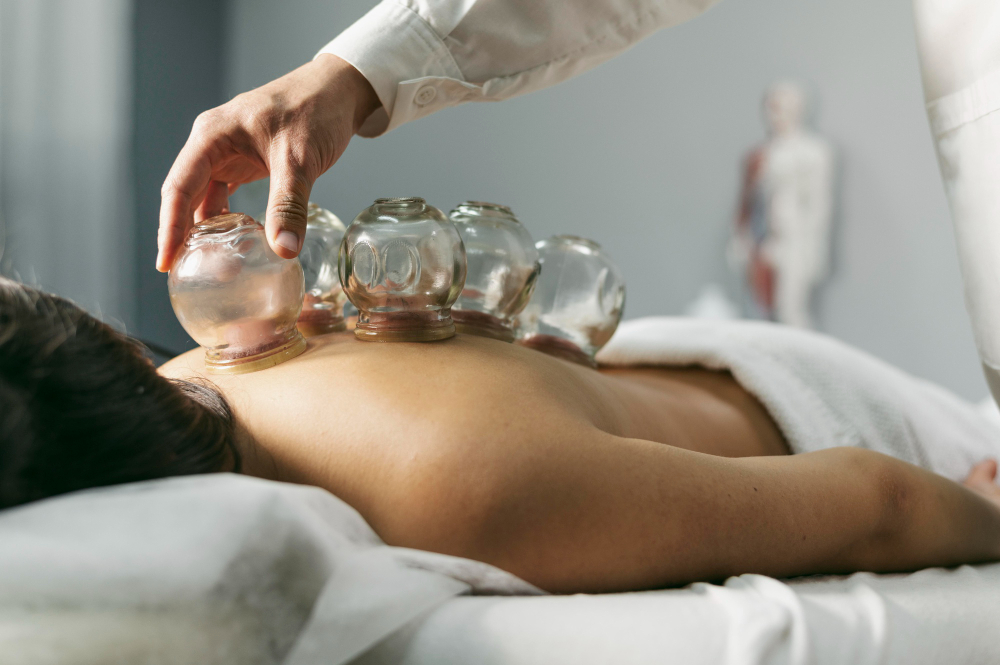
Cupping is a therapy rooted in East Asian medicine. A practitioner places special cups on the skin and creates gentle suction, which lifts the muscle and fascia underneath. Think of it as the opposite of a deep-tissue massage. Instead of pressing down into the muscle, cupping pulls the tissue up. That lifting motion gets blood flowing, helps loosen up areas that feel tight and stuck, and gives the body a nudge toward recovery.
There is more than one way to do it, too. Sometimes the cups stay in one spot for a few minutes. Other times the practitioner adds a little oil and glides them across bigger muscles, which feels a bit like a massage in reverse. If you have been curious about trying cupping NYC studios offer, that gliding technique is often the one people fall in love with first.
What Cupping Can Genuinely Do
Here is the good news, and where the real benefits live. Cupping shines when it comes to loosening up tight muscles and helping a stressed-out body reset. Specifically, it can help with:
- Muscle tension and tightness, especially in the neck, shoulders, and back where desk work and long commutes love to pile up strain
- Post-workout recovery, which is why so many athletes, dancers, and weekend warriors keep coming back for it
- Better circulation, since the suction pulls fresh blood to the surface and gets things moving in spots that feel stuck
- Stress relief, by nudging your body out of that wired, always-on state and into rest mode
That last one tends to surprise people. Plenty of folks book cupping therapy in NYC for their aching shoulders and end up loving how calm and unwound they feel afterward.
And What It Cannot Do
Now for the honest part. Cupping is not magic, and it is not a cure-all. It will not fix a serious injury, replace the care of your doctor, or permanently erase a problem that runs deeper than muscle tension. And those dramatic circular marks? They are not proof that toxins are being sucked out of your body. They are simply blood drawn up toward the surface, and they fade on their own within a few days.
It also is not a one-and-done miracle. A single session can feel great, but the real, lasting benefits tend to show up when cupping becomes a regular part of your routine, often paired with acupuncture or other supportive treatments. For anything stubborn or complicated, it works best as a helpful piece of the puzzle, not the whole solution.
Getting the Most Out of It
The people who love cupping the most are usually the ones who walk in with realistic expectations. If your goal is to loosen tight muscles, bounce back after a hard workout, get your circulation moving, or just melt into a moment of calm, cupping delivers. If you are hoping it will single-handedly cure a long-term illness, it is going to fall short, and any honest practitioner will tell you that.
How often should you go? It depends on you. Some people book a session every week or two when life gets stressful, or training ramps up. Others drop in now and then for a tune-up. A good practitioner will talk through your goals and help you land on a rhythm that actually fits your body and your life.
The Bottom Line
Cupping has stuck around for thousands of years, and that is not by accident. Approached with clear expectations, it offers real relief for tension, circulation, and stress. The wishful thinking only sneaks in when it gets sold as something it is not. Skip the hype, keep your expectations grounded, and cupping can be a genuinely great addition to how you take care of yourself. If those circular marks have been calling your name, it just might be worth a try.